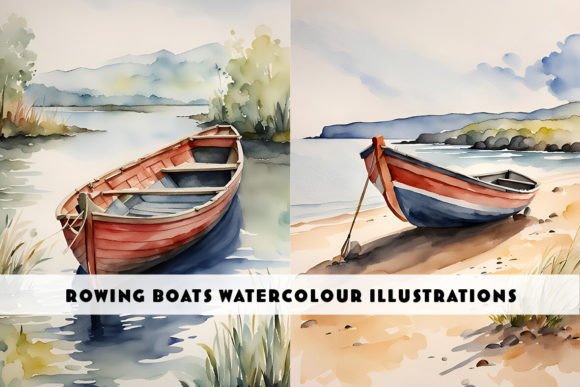
Evaluating Rowing Boat Watercolour Illustrations for Creative Projects
Digital art has transformed the way designers, crafters, and content creators approach visual storytelling. Among the vast array of available assets, Rowing Boat Watercolour Illustrations have emerged as a versatile resource for those seeking to infuse their work with a sense of tranquility, nostalgia, and organic texture. These digitally created watercolour paintings offer a unique blend of traditional artistic aesthetics and modern convenience, making them suitable for a wide range of applications from commercial marketing materials to personal scrapbooking endeavors.
When considering whether to incorporate these illustrations into your workflow, it is essential to understand not just what they are, but how they function within different design contexts. This evaluation explores the practical benefits, technical considerations, and ideal use cases for high-resolution digital watercolours, helping you determine if they align with your specific creative goals.
Understanding the Asset: Digital Watercolour Aesthetics
Rowing Boat Watercolour Illustrations typically feature hand-painted styles that mimic the fluidity, transparency, and soft edges characteristic of traditional watercolor media. Unlike vector graphics, which are defined by mathematical paths and sharp lines, watercolour illustrations rely on subtle gradients, pigment blooms, and paper texture interactions. In a digital format, these elements are captured in high-fidelity image files, preserving the artistic nuance while eliminating the physical constraints of paint, water, and drying time.
The subject matter—rowing boats—evokes specific emotional responses. It suggests leisure, exploration, and a connection to nature. For designers, this thematic consistency is valuable. Whether the boat is depicted on a calm lake or amidst gentle waves, the imagery serves as a visual anchor for projects related to travel, wellness, outdoor recreation, or serene lifestyle branding.
Key Benefits for Designers and Crafters
The primary advantage of using pre-made digital illustrations like these is efficiency. Creating authentic watercolour art from scratch requires significant skill, time, and specialized software brushes. By utilizing professionally created assets, users can bypass the learning curve and production time, allowing them to focus on layout, composition, and messaging.
- Versatility Across Media: These illustrations are designed to be adaptable. They work equally well in digital environments, such as social media posts and website banners, as they do in print media like flyers and posters. The organic nature of watercolour tends to soften the often rigid structure of corporate or informational designs, making them more approachable.
- High-Resolution Quality: A critical factor in evaluating any digital asset is resolution. High-quality downloads, such as those provided at 300dpi in A4-sized JPG formats, ensure that the images remain crisp and detailed when printed. This is particularly important for physical crafts like scrapbooking, where pixelation can detract from the professional look of the final product.
- Emotional Resonance: Watercolour textures carry an inherent warmth and humanity. In an era dominated by sleek, minimalist, and often cold digital interfaces, adding a watercolour element can humanize a brand or project. It signals care, craftsmanship, and attention to detail.
Technical Considerations and Tradeoffs
While digital watercolours offer numerous advantages, there are technical tradeoffs to consider. Understanding these limitations is crucial for effective implementation.
File Format Limitations: Most digital watercolour illustrations are distributed as JPG or PNG files. Unlike SVG or AI vector files, raster images cannot be scaled up indefinitely without losing quality. While a 300dpi A4 file is sufficient for most standard prints and digital screens, it may not be suitable for large-format printing, such as billboards or building wraps, without noticeable degradation. Users must plan their project dimensions carefully to ensure the source file matches the output requirements.
Background Transparency: Many watercolour illustrations come with white or textured backgrounds. If your project requires the boat to sit on a colored or photographic background, you may need to use image editing software to remove the background or blend the edges. Some assets include transparent PNGs, but JPGs do not support transparency. Checking the specific file types included in the download is a necessary step before purchase.
Style Consistency: Watercolour is a broad style. One artist’s interpretation may be loose and abstract, while another’s is detailed and realistic. When selecting Rowing Boat Watercolour Illustrations, it is important to review the specific artistic style to ensure it complements the rest of your design elements. Mismatched styles can create visual dissonance rather than harmony.
Ideal Use Cases
Certain projects benefit more from this type of imagery than others. Evaluating your project’s intent can help determine if these illustrations are the right fit.
Print and Craft Projects
For hobbyists and professional crafters, these illustrations are excellent for scrapbooking, card making, and journaling. The tactile feel of watercolour pairs well with physical paper stocks. Printing them on high-quality matte or textured paper can enhance the illusion of traditional painting. They are also suitable for creating custom wrapping paper, gift tags, and decorative ephemera.
Digital Marketing and Social Media
In digital marketing, standing out in a crowded feed is challenging. Watercolour illustrations offer a distinct visual break from stock photography and flat design icons. They are particularly effective for brands in the wellness, tourism, and education sectors. For example, a yoga studio might use a rowing boat illustration to symbolize balance and journey, while a travel agency might use it to evoke peaceful getaways. These images perform well on platforms like Instagram and Pinterest, where aesthetic appeal drives engagement.
Educational and Editorial Content
Editors and educators often seek imagery that is engaging but not distracting. Watercolour illustrations provide a soft, non-intrusive visual aid that can complement text-heavy layouts. They are suitable for children’s books, educational worksheets, and blog headers where a gentle, inviting tone is desired.
When to Consider Alternatives
Despite their versatility, Rowing Boat Watercolour Illustrations may not be the best choice for every scenario. If your project requires precise technical accuracy, such as an engineering diagram or a nautical chart, vector line art or photographic references would be more appropriate. Similarly, if your brand identity is strictly modern, industrial, or tech-focused, the organic, soft nature of watercolour might clash with your established visual language.
Additionally, if you require extensive customization of individual elements—such as changing the color of the boat’s hull or adjusting the angle of the oars—raster images may prove limiting. In such cases, commissioning a custom vector illustration or using modular design tools might offer greater flexibility.
Making the Decision
Choosing the right visual assets is a strategic decision. To determine if Rowing Boat Watercolour Illustrations are suitable for your needs, ask yourself the following questions:
- Does the emotional tone of my project align with the serenity and nostalgia associated with watercolour art?
- Are my output dimensions within the limits of the provided 300dpi A4 files?
- Do I have the capability to edit or blend the images if background removal is required?
- Will this style differentiate my project positively from competitors using generic stock photography?
If the answers are affirmative, these digital paintings can serve as a powerful tool in your creative arsenal. They offer a balance of artistic integrity and practical usability, allowing you to produce high-quality visuals efficiently. As digital libraries continue to grow, subscribing to stores that specialize in these niche illustrations can provide a steady stream of fresh, cohesive assets for future projects. By understanding both the capabilities and limitations of these resources, you can leverage them to enhance the aesthetic appeal and emotional impact of your work.