Integrating Father’s Day Clipart and Sublimation into Your Creative Workflow
For creative professionals, small business owners, and hobbyists alike, the period leading up to major holidays represents a critical window for productivity and revenue generation. Among these occasions, Father’s Day stands out as a significant event for personalized gift-giving. Successfully capitalizing on this demand requires more than just artistic talent; it demands a streamlined workflow that integrates high-quality assets with efficient production methods. This is where the strategic use of Father’s Day clipart combined with sublimation printing techniques becomes essential. By understanding how these two elements interact within a broader design and manufacturing process, creators can reduce friction, maintain consistency, and deliver superior products.
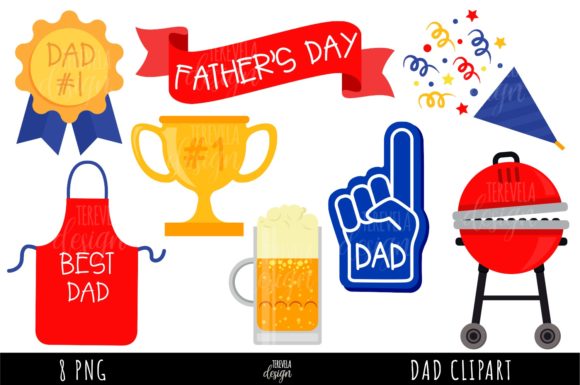
The core of this workflow begins with asset selection. A typical Father’s Day clipart set might include eight cute graphics designed specifically for versatility. These are not merely decorative images; they are functional components of your design ecosystem. When you acquire a pack containing files in PNG format with transparent backgrounds at approximately 300 DPI, you are securing the foundational layer of your production pipeline. The transparency is crucial because it allows for seamless integration onto various substrates without the need for complex masking or background removal tasks during the design phase. This initial preparation step saves considerable time later in the process, allowing you to focus on layout and customization rather than technical cleanup.
Pre-Production Planning and Asset Organization
Before any design work begins, effective organization is paramount. When you receive a zip file containing your eight graphic files, the first action should be extraction and categorization. Store these assets in a dedicated folder within your digital library, labeled clearly for quick retrieval. This practice supports long-term efficiency, especially if you plan to reuse these designs for future campaigns or variations. High-resolution files, such as those sized at 12x12 inches and 300 DPI, ensure that your output remains crisp and professional, whether you are printing on small stickers or larger apparel items.
Understanding the compatibility of these assets with your chosen software is also part of the pre-production phase. Most modern design platforms, including Adobe Photoshop, Illustrator, Canva, and Procreate, handle PNG files with transparency effortlessly. However, verifying how these clips interact with your specific color profiles and canvas settings prevents unexpected shifts in hue or clarity. For sublimation projects, color accuracy is vital because the heat transfer process can sometimes alter the final appearance. By testing a small batch early in the planning stage, you establish a baseline for quality control that guides the rest of your production run.
Design Implementation and Customization
Once your assets are organized, the design phase begins. The eight cute graphics included in a standard Father’s Day pack offer a range of thematic elements suitable for various products. Because these images are pre-designed, they serve as accelerators in your workflow. Instead of creating illustrations from scratch, you can focus on composition and typography. This approach is particularly beneficial for entrepreneurs and freelancers who need to produce multiple design variations quickly to meet diverse customer preferences.
Consider the end-use of your product during this stage. If you are designing for scrapbooking or paper crafts, the resolution and scale of the clipart allow for detailed close-ups. For card design and party invitations, the transparent background enables you to layer the graphics over textured papers or patterned backgrounds without visual conflict. When preparing files for sublimation, remember to mirror your design horizontally before printing. This step is often overlooked but is critical for ensuring that text and directional graphics appear correctly on the final product. Integrating this check into your standard operating procedure eliminates costly errors and material waste.
The Sublimation Process: From Digital to Physical
Sublimation printing transforms your digital designs into tangible goods by using heat to transfer dye onto materials such as polyester-coated mugs, t-shirts, and phone cases. The quality of your input file directly influences the outcome of this process. Using 300 DPI PNGs ensures that the dye sublimates evenly, resulting in vibrant, long-lasting images. Lower resolution files may appear pixelated or blurry after transfer, undermining the perceived value of your product.
During the sublimation phase, consistency is key. Maintain precise temperature and time settings according to your equipment’s specifications and the substrate you are using. The eight graphics in your clipart set can be tested across different materials to determine which combinations yield the best results. For instance, a graphic that looks excellent on a white polyester shirt might require color adjustment when applied to a darker or textured surface. Documenting these observations creates a knowledge base that enhances your efficiency in future projects. This iterative learning process is a hallmark of professional craftsmanship and helps refine your overall workflow.
Post-Production and Quality Control
After the sublimation process is complete, the workflow shifts to quality control and finishing. Inspect each item for color fidelity, alignment, and durability. The transparent nature of the original PNG files means that any imperfections in the substrate or printing process will be visible, making thorough inspection necessary. This step ensures that only products meeting your standards reach the customer, protecting your brand reputation and reducing return rates.
Beyond physical inspection, consider how these products fit into your broader marketing and sales strategy. The versatility of the clipart set allows for cross-promotion across different product lines. You might use the same graphic on a mug, a t-shirt, and a sticker pack, creating a cohesive collection that appeals to various customer segments. This multi-product approach maximizes the return on investment for your initial asset purchase and design effort. Additionally, high-quality visuals derived from these cliparts can be used in your online store listings, social media posts, and email newsletters, further extending their utility beyond the physical product.
Long-Term Usability and Workflow Integration
Integrating Father’s Day clipart and sublimation into your routine is not a one-time task but a recurring component of your annual business cycle. By establishing a standardized workflow for handling these assets, you reduce the cognitive load associated with seasonal rushes. Save your template files, document your sublimation settings, and archive your successful designs. This repository becomes a valuable resource for future holidays and events, allowing you to scale your operations with minimal additional effort.
Furthermore, staying updated with design trends and sublimation technologies ensures that your workflow remains competitive. While the eight graphics in your current pack provide a solid foundation, continuously expanding your asset library with complementary elements keeps your offerings fresh and engaging. Engage with communities of fellow creators and marketers to share insights on best practices, troubleshooting tips, and new application ideas. This collaborative learning enhances your expertise and helps you adapt to changing market demands.
In conclusion, the effective use of Father’s Day clipart in sublimation projects hinges on careful planning, precise execution, and rigorous quality control. By treating these digital assets as integral parts of a structured workflow, you enhance efficiency, maintain high standards, and deliver products that resonate with customers. Whether you are a seasoned entrepreneur or a hobbyist looking to monetize your creativity, mastering this integration empowers you to navigate the seasonal rush with confidence and professionalism. The result is not just a finished product, but a refined process that supports sustainable growth and creative satisfaction.